Digital Twin Technology: A Complete Guide for Modern Engineering
1. What Is a Digital Twin?
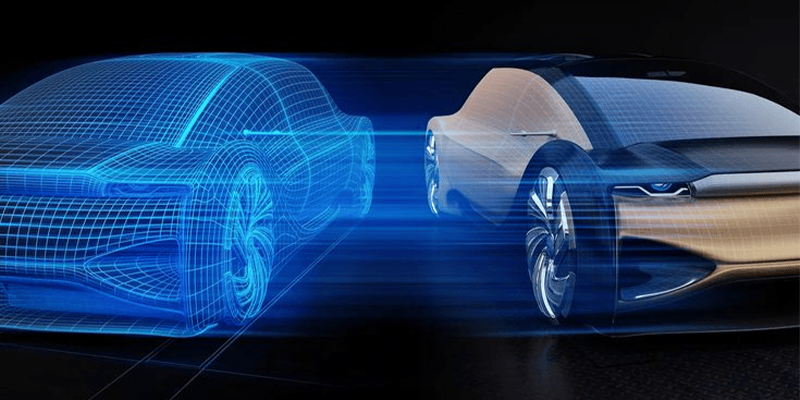
A digital twin is a virtual replica of a real-world asset or system, continuously updated through sensor data and simulations. It allows engineers to analyze performance, detect issues and validate design decisions without building physical prototypes.
2. Why Digital Twins Matter?
Digital twins shorten development cycles, reduce costs and improve design precision. By simulating real-world conditions, they support smarter engineering decisions and enable faster innovation across complex industries.
3. Key Applications of Digital Twin Technology
– Product Lifecycle Management (PLM)
PLM systems centralize product data to enhance collaboration, accelerate development and support high-quality product delivery.
– Performance Engineering
Multiphysics simulations enable early performance testing, helping engineers optimize product efficiency and identify issues long before production.
– Machine Automation Engineering
Digital twins streamline automation workflows, reduce engineering time, optimize machine utilization and support sustainable innovation.
– Low-Code Application Development
Low-code platforms dramatically speed up the creation of custom engineering tools, enabling rapid digital transformation with fewer resources.
– E/E Systems Development
Engineers use digital twins to simulate and refine electrical and electronic systems, simplifying the development of modern, complex architectures.
4. Core Capabilities of Digital Twin Solutions
Real-Time Data Integration (PLM)
Live IoT and sensor data keep the digital twin synchronized with the physical asset, ensuring accurate monitoring and analysis.
Simulation & Modeling
Digital twins simulate system behavior under various conditions, enabling predictive analysis, optimization and scenario exploration.
Bi-Directional Communication
Data flows both ways between the virtual and physical systems, creating a closed feedback loop that supports better decision-making.
Monitoring & Control
Engineers can remotely monitor, diagnose and maintain assets through a virtual environment, reducing downtime and improving efficiency.
5. Digital Twin Across the Product Lifecycle
- Engineering Phase
Combining MBSE with detailed digital models, digital twins validate requirements, predict performance and minimize late-stage design changes.
- Manufacturing Phase
In factories, digital twins simulate production lines, identify bottlenecks, support predictive maintenance and reduce commissioning time.
- Lifecycle Management
A lifecycle digital twin maintains a continuous and traceable product record, enabling unified decision-making across all teams and departments.
- Service Phase
Service teams use digital twins for predictive maintenance, remote diagnostics, software updates and optimized spare-parts planning—improving uptime and reducing service costs.